Imagine, you’re deep in the wilderness, miles from the nearest road, hands busy grasping trekking poles as you navigate a steep, rocky incline. Suddenly, a sound off the trail stops you cold, maybe it’s a startled deer, maybe it’s something bigger, or maybe you just need to glance at your GPS unit quickly. In that split second, you realize the gear you rely on most, your personal protection, bear spray, or even a critical navigation tool, is awkwardly tucked away, inaccessible under a heavy backpack or cinched down by a hip belt. This moment defines why so many seasoned hikers are now turning to the chest holster for hiking as their definitive carry solution.
For anyone venturing into the backcountry, whether for a quick day trip or a multi-day trek, the chest holster solves a fundamental problem: speed and security. It is a specialized harness system designed to secure essential gear high on the torso, ensuring that whatever you need is immediately available regardless of how much gear you are carrying or how rugged the terrain is. Unlike traditional hip holsters that often clash with your backpack’s waist belt or shoulder straps, or inside-the-pack storage that requires dropping your bag entirely, the chest mount provides unrestricted, central access.
This isn’t just a guide about a piece of gear; it’s a detailed exploration of preparedness. Over the next few sections, we will cover everything you need to know about selecting, fitting, and safely using the ideal chest holster for hiking and all your backcountry excursions.
The Core Rationale: Advantages of Chest Carry (Why Not Hip?)
If you’ve spent any time hiking, you know that every piece of gear has to earn its place on the trail. So, why trade the familiar hip or belt carry for a chest holster for hiking? The rationale boils down to three major factors that dramatically improve safety, comfort, and efficiency in a wilderness environment.
A. Unrestricted Accessibility
This is the number one reason chest carry has become the gold standard for backcountry carry systems.
When you are hiking, you are almost always wearing a substantial backpack. That pack has a thick, padded hip belt that secures over your waist, exactly where you would traditionally place a belt holster. This unavoidable hip belt interference means that your critical gear is either pushed into an uncomfortable position, completely blocked, or, worse, requires an awkward, time-consuming effort to draw.
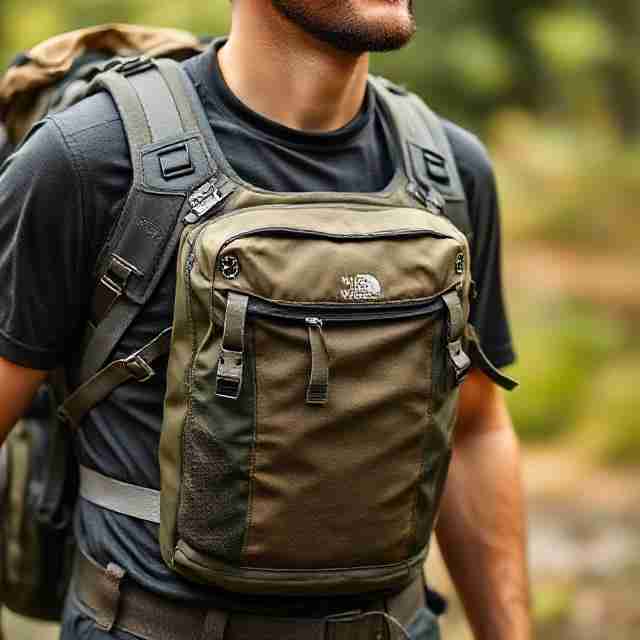
A chest holster, however, sits above the pack’s hip and shoulder straps. The difference in reaction time is immense. In a time-sensitive situation, whether it’s a wildlife encounter or a sudden need for a medical device, quick access can mean everything. Your hands move naturally up and forward, minimizing the need to twist your torso or fumble with straps. This speed of draw, particularly in unexpected moments, is a non-negotiable benefit.
B. Protection and Retention
Hiking exposes your gear to the elements. A side-mounted hip holster or simple belt loop can leave your firearm or bear spray canister vulnerable to all kinds of trail hazards.
Imagine crossing a muddy creek or scrambling over slick, wet rocks. Gear carried low on the hip is far more likely to get soaked, coated in dirt, or dragged through dense brush. A secure chest holster for hiking keeps your equipment elevated and centralized, offering immediate protection from water, mud, and excessive debris.
Furthermore, a quality chest system offers superior retention. When you slip, trip, or take an unexpected tumble (and trust me, it happens), you want your gear to stay securely attached. Chest holsters are engineered with robust, often active, retention mechanisms that keep your equipment locked down, reducing the risk of an accidental drop or loss, a disaster deep in the woods. This improved control and reduced snag risk is vital when moving through tight spaces or dense foliage compared to simple belt carry [Source: Wilderness Safety Review, 2023].
C. Comfort and Weight Distribution
While accessibility is critical, comfort is what makes a piece of gear sustainable over a long-distance trek. A heavy item carried on a hip belt or simply clipped to a strap can create uncomfortable pressure points, leading to chafing, soreness, or even poor posture over many miles.
Chest holsters distribute the weight (even if minimal) more centrally and evenly across your upper torso. This positioning near the body’s center of gravity helps maintain better overall balance during rugged movement. Instead of the weight pulling against your hip bone or creating localized friction under a tightly cinched pack strap, the load is spread across the harness, which is designed to integrate seamlessly with the shape of your body and the natural structure of your backpack. Eliminating the pinching or rubbing caused by traditional holsters under pack straps allows you to focus on the trail, not on discomfort.
The Buying Guide: Critical Features for Hiking (Hiker-Specific Needs)
So, you are convinced that chest carry is the way to go. Now comes the hard part: choosing the right one. Not all chest holsters are created equal, and a model designed for static military use won’t cut it for dynamic, fast-paced hiking. Here’s what an experienced hiker looks for when investing in a chest holster for hiking.
A. Fit and Adjustability
A holster that bounces, slides, or chafes is worse than no holster at all. Fit is paramount for both comfort and safety.
The Four-Point Harness System
Look specifically for a harness that secures the holster platform using four distinct connection points, two high on the shoulder straps and two lower on the sides/rib cage area. The best systems offer vertical and horizontal adjustment at all four points. This allows you to dial in a secure, non-bouncing fit that keeps the holster flat against your chest while you move. This type of harness ensures stability whether you are running a trail or simply walking.
Pack Compatibility
Before buying, consider how the holster’s straps interact with your specific backpack. The ideal design ensures that the holster straps sit outside the backpack shoulder straps without crossing them, causing uncomfortable bunching, or creating new pressure points. If the holster’s straps are too thick or bulky, they can actually undermine the load-bearing function of your backpack, transferring weight improperly and causing shoulder pain.
B. Material and Durability
The trail is tough on gear. Your chest holster for hiking needs to withstand everything from sudden downpours to relentless sweat.
Weather Resistance
Focus on materials that are explicitly hydrophobic. Look for high-denier nylon, Cordura, or polymer (Kydex) construction. These materials resist absorbing water and sweat, which is crucial. A waterlogged holster gets heavier, takes forever to dry, and can compromise the finish of the gear it holds. Sweat resistance is equally important; continuous exposure to salt and moisture can lead to faster material degradation and hardware rust.
Trail Toughness
A durable holster has robust, reinforced stitching at all stress points, especially where the harness meets the main pocket. Hardware quality is also critical. Avoid flimsy plastic clips. Look for durable, military-grade polymer buckles or metal D-rings, which can reliably withstand sharp temperature shifts and accidental impacts without cracking or failing.
C. Gear Compatibility and Retention
This is where the rubber meets the road, your holster must safely and efficiently hold the item it’s intended for.
Firearm/Canister Specific Fit
Avoid “universal” cloth or nylon holsters for self-defense tools. A proper secure firearm holster or dedicated bear spray rig is form-fitting to the exact dimensions of your equipment. This ensures the gear is held firmly in place, protects the trigger guard (for firearms), and minimizes rattling, which can be an annoyance (and a giveaway) on a quiet trail.
Active Retention Mechanisms
For fast-moving hikers and steep terrain, active retention mechanisms are mandatory. This goes beyond the friction fit. Look for thumb-break snaps, specialized button locks, or sturdy elastic straps designed to secure your gear until you deliberately release it. This necessity is highlighted in studies on gear safety, confirming that a secondary retention measure significantly reduces accidental loss or deployment.
D. Modularity and Storage
The best chest holsters offer a little extra utility without adding unnecessary bulk.
Thoughtful modularity often includes extra small pockets, elastic loops, or Molle webbing. These are perfect for small, critical necessities that you need as quickly as your main tool: a spare GPS battery, a whistle, a compact knife, or extra rounds. This bonus storage turns the chest holster from just a carry solution into a compact, immediately accessible “go-to” kit.
Critical Feature Checklist for Your Hiking Chest Holster
| Feature Category | Critical Requirement | Why It Matters for Hiking |
|---|---|---|
| Fit System | Four-Point Harness | Prevents bouncing and ensures stability during running or climbing. |
| Ergonomics | Pack Compatibility | Eliminates uncomfortable hip belt interference and pressure points under shoulder straps. |
| Material | Hydrophobic Fabric (Nylon/Cordura) | Resists sweat absorption and prevents the holster from becoming waterlogged in rain. |
| Security | Active Retention | Uses snaps, straps, or locks to secure gear, preventing loss during a fall or slip. |
| Design | Gear-Specific Mold | Ensures the trigger guard is protected (for firearms) and minimizes gear rattle. |
| Durability | Reinforced Stitching | Withstands the constant stress and friction of trail movement over thousands of miles. |
Chest Holster Types: Matching Gear to Terrain
Choosing the right chest holster for hiking also means understanding the three main categories available and how they align with your intended use. A lightweight day hike in a national park demands a very different system than a two week expedition into remote wilderness. Matching the gear to the mission is the secret to successful carry.
A. Lightweight & Minimalist Designs
If your hiking focuses on established trails, high-mileage days with minimal load, or trail running, the minimalist chest holster is your best friend.
Who it’s for: Day hikers, trail runners, and those carrying smaller personal defense items (e.g., a compact 9mm or a midsize revolver).
Key characteristics:
- Simplified Harness: They often use thinner webbing and may only rely on three connection points instead of four, focusing on shedding ounces.
- Low Profile: The main body of the holster is often thin nylon or a skeletal Kydex frame, designed to maximize airflow and ventilation. This is crucial when you are moving fast or hiking in hot, humid weather.
- Focus on Ventilation: The less material touching your body, the less sweat builds up. These designs prioritize mesh or vented backs, which significantly boost comfort during strenuous activity. The downside is that they offer less padding for heavier objects.
The appeal of a minimalist chest holster is its balance. It offers the same immediate, central access without feeling like you’re wearing an extra layer of body armor. It’s perfect for ensuring your GPS or satellite communicator stays charged and secure, or for carrying personal defense items quickly and discreetly, especially under a jacket during cooler weather.
B. Heavy-Duty & Hunting Styles
When the terrain gets serious, the animals get bigger, and your gear gets heavier, you need a heavy-duty holster built to match the intensity of the environment. These are the workhorses of the chest carry world.
Who it’s for: Big game hunters, deep backcountry explorers, and anyone venturing into areas populated by large, aggressive predators (like grizzly or brown bears). These hikers often carry larger caliber handguns (such as a 44 Magnum or 10mm auto).
Key characteristics:
- Rigid Structure: These holsters typically use thick, rigid Kydex or heavy-duty, molded leather. This construction ensures the holster maintains its shape even when a large, heavy firearm is drawn and reholstered repeatedly.
- Wide Straps and Padding: To comfortably support the extra weight of a large caliber pistol, the harness straps are often wider and more padded, helping to distribute the load across the shoulders and chest without cutting in.
- Full Coverage: Heavy-duty models usually cover the entire barrel of the firearm. This provides enhanced protection from the environment and greater security against accidental snagging on branches or rock faces.
- Ancillary Gear Carriers: Many hunting chest holsters incorporate built-in carriers for speedloaders or extra magazines. This dedicated storage ensures you can quickly reload your large sidearm without dipping into your main backpack.
While heavier and hotter than minimalist versions, the robust retention and superior protection offered by the heavy-duty chest holster are absolutely non-negotiable when your safety relies on the secure, reliable performance of a large caliber sidearm.
C. Dedicated Bear Spray Rigs
In many parts of the North American wilderness, the bear spray holster is arguably the most common and vital piece of chest carry gear. It’s a specialized category because the speed and nature of deployment for bear spray are unique.
The Goal: Immediate, one-handed deployment under duress. Bear encounters are sudden, and the reaction window is measured in seconds.
Key characteristics:
- Canister Specific: These rigs are molded or sized to securely fit standard bear spray canisters (typically 7.9 oz to 9.2 oz).
- Immediate Thumb Break: The primary retention is often a simple, intuitive thumb break or a heavy elastic loop that requires minimum force to deploy. This design is focused entirely on drawing the spray and aiming without looking or fumbling.
- Anti-Accidental Discharge: Crucially, a good chest holster for hiking that carries bear spray will protect the safety clip or mechanism on the canister to prevent accidental discharge while you are moving. The last thing you want is a face full of pepper spray because a branch flipped your safety switch.
Whether you carry a firearm or not, if you are hiking in Ursus habitat, having a dedicated bear spray rig mounted on your chest is the single most effective way to ensure this critical defense tool is ready to use instantly.
Safety and Legal Considerations
Carrying any piece of defensive equipment, especially a firearm, comes with a profound responsibility. When using a chest holster for hiking, you are almost certainly choosing to carry openly, which brings a specific set of rules and practices to the forefront. Being prepared means being responsible and informed.
A. State and Local Compliance
This point cannot be stressed enough: You must research the specific legal regulations for every piece of land you hike on.
The rules for carrying firearms vary widely, not just state by state, but between different types of federal, state, and private lands.
The Jurisdictional Difference
- National Forests (NF): Generally allow open carry of firearms in accordance with state laws, subject to some federal restrictions.
- National Parks (NP): Historically very restrictive, but federal laws now permit carry in national parks, provided you are legally permitted to carry a firearm under the law of the state in which the park is located. However, strict rules still apply. For example, carrying inside federal facilities (visitor centers, restrooms) is prohibited.
- State Parks and Wilderness Areas: These are highly dependent on the state’s laws regarding open carry permits and specific park regulations. Some states prohibit open carry on park grounds entirely.
Action Item: Before your trip, verify the type of land you are entering (e.g., Bureau of Land Management, State Forest, National Park) and then research the current regulations. A chest holster for hiking makes your carry method highly visible, so compliance is paramount. This is not legal advice; always consult official sources or legal counsel.
B. Drawing Practice and Muscle Memory
The way you access your gear from a chest holster is fundamentally different than drawing from the hip. It requires dedicated practice to build muscle memory.
Essential Practice Drills
- Empty and Clear: Always, always practice with an empty, verified safe firearm or an inert training device.
- The Pack Draw: Practice drawing and reholstering while wearing your fully loaded backpack. You need to clear the straps and ensure your movement is fluid and natural. The position of your pack’s sternum strap can interfere, and you must train to move around it efficiently.
- Dynamic Movement: Practice drawing from various common hiking positions: while kneeling to check a map, while stepping over a fallen log, and even drawing from a seated or prone position. The goal is to make the action automatic under stress.
- Retention Release: Get extremely familiar with your holster’s active retention mechanism. You need to be able to defeat the retention and draw the equipment in one smooth, coordinated motion without having to look down. This mastery is what makes the chest holster an effective rapid deployment system.
C. Trail Etiquette and Visibility
When you choose a chest holster for hiking, you are choosing an openly visible carry method. This places an extra layer of responsibility on you for trail etiquette.
Your preparedness should never come across as intimidation. While most fellow hikers are focused on enjoying nature, some people may feel uncomfortable or anxious seeing openly carried equipment.
Best Practices for Open Carry:
- Be Approachable: Maintain a friendly, non-aggressive demeanor. A simple nod or smile goes a long way. Your goal is to be a prepared, responsible hiker, not to make others uneasy.
- Keep Distance: If you encounter other hikers, especially families with children or those who appear nervous, maintain a respectful distance where possible.
- Muzzle Direction: Always be hyper aware of your equipment’s orientation. Ensure the holster securely covers the muzzle and that the gear is pointing downward or safely away from other people at all times, especially when you are adjusting your pack or resting.
- Avoid Unnecessary Handling: Once holstered, leave it alone. Constantly touching, adjusting, or showing off the equipment is poor trail etiquette and only serves to increase visibility and discomfort for others. Trust the retention system you bought.
Conclusion: Gear for Preparedness
The decision to use a chest holster for hiking is a decision to prioritize accessibility and responsible preparedness in the backcountry. It is a necessary shift in gear management that acknowledges the realities of carrying a large backpack and the absolute need for immediate access to critical tools, whether for navigation, defense against wildlife, or personal security.
If you remember only three things from this guide, let them be these: Fit, Retention, and Legality.
First, the fit must be perfected. Spend the time adjusting the four-point harness until it sits securely, integrating flawlessly with your specific backpack without creating hot spots or discomfort. A well-fitted holster feels like an extension of your body, not an obstacle. Second, demand superior active retention. The wild can be unpredictable; your holster must be a safe, secure vault that only releases its contents when you deliberately choose to draw. Finally, always adhere to legality. Your most important tool is the knowledge of local laws, ensuring your preparedness does not turn into a legal misstep on federal or state land.
Hiking is about immersion, challenge, and freedom. By choosing the right chest holster for hiking, you ensure that your focus remains firmly fixed on the beauty of the trail ahead, confident that your most vital equipment is ready at a moment’s notice. It is the ultimate expression of the expert hiker’s ethos: Be prepared, stay safe, and enjoy the wild with absolute peace of mind.