Here’s a question I get asked all the time on the trail: “Can I just wear my work boots hiking?” Usually, it’s from someone who’s eyeing their trusty steel toes sitting by the door, wondering if they really need to drop cash on another pair of boots.
The short answer? Hiking boots and work boots are built for completely different jobs. Hiking boots prioritize lightweight comfort and grip for covering miles on uneven terrain. Work boots focus on protection and durability for standing all day on job sites. While there’s some overlap, using the wrong boot for your activity can lead to sore feet, safety issues, or worse.
I’ve spent over fifteen years guiding people through mountains, deserts, and everything in between. I’ve also watched plenty of folks learn the hard way why their construction boots left them limping after a 5-mile hike. Let’s break down what actually makes these boots different, when each one shines, and how to pick the right one for what you’re doing.
Quick Comparison: Hiking Boots vs Work Boots
Before we get into the details, here’s a snapshot of how these boots stack up:
| Feature | Hiking Boots | Work Boots |
|---|---|---|
| Primary Purpose | Trail performance, distance comfort | Workplace protection, durability |
| Average Weight | 1.5-3 lbs per pair | 3-5 lbs per pair |
| Toe Protection | Reinforced rubber or leather | Steel, composite, or alloy safety toe |
| Sole Design | Aggressive lugs for grip | Flat, slip-resistant tread |
| Flexibility | More flexible for varied terrain | Stiffer for stability and protection |
| Breathability | High (mesh panels, vents) | Low (sealed for protection) |
| Waterproofing | Breathable membranes (Gore-Tex) | Full leather, less breathable |
| Break-in Time | 1-2 weeks, minimal | 2-4 weeks, significant |
| Price Range | $80-$400 | $100-$350 |
| Best For | Trails, backpacking, outdoor recreation | Construction, industrial work, OSHA sites |
What Makes Hiking Boots Different
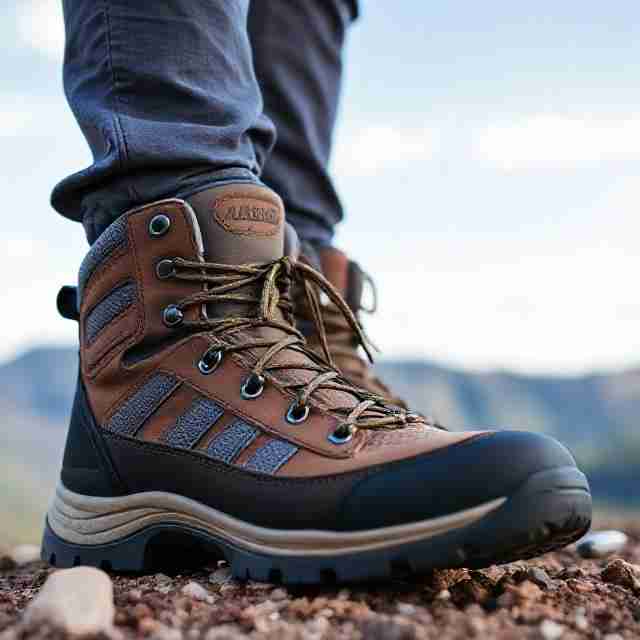
Hiking boots exist for one reason: to help you cover ground comfortably on unpredictable terrain. Every design choice comes back to that goal.
Built for Movement
The first thing you notice when you pick up a quality hiking boot is the weight. Most pairs clock in around 2 pounds, sometimes less. That might not sound like much, but consider this: you lift each foot roughly 1,000 times per mile. Over a 10-mile hike, saving even half a pound per boot means lifting 500 fewer pounds. Your legs will thank you.
Modern hiking boots use materials like synthetic fabrics, lightweight leather, and EVA foam midsoles to cut weight without sacrificing support. The Salomon X Ultra 4, for example, weighs just 1.9 pounds while still providing solid ankle support for day hikes.
Traction That Actually Works
Look at the bottom of a hiking boot and you’ll see what separates it from regular footwear. Those deep, widely-spaced lugs aren’t just for show. They’re engineered to bite into soft dirt, shed mud, and grip wet rocks. Companies like Vibram have spent decades perfecting rubber compounds that stay sticky on granite and don’t turn into hockey pucks when it gets cold.
The lug pattern matters too. Hiking boots typically feature 4-5mm deep lugs arranged in multidirectional patterns. This gives you traction whether you’re climbing uphill, braking on descents, or traversing sideways across a slope.
The Flexibility Factor
Here’s where hiking boots really differ from their work cousins. A good hiking boot flexes at the ball of your foot, letting you roll through your natural stride. This flexibility helps you adapt to roots, rocks, and uneven ground without fighting your footwear.
At the same time, the boot needs to support your ankle on side slopes and when carrying a pack. It’s a tricky balance. Lighter day hiking boots lean toward flexibility, while backpacking boots add structure for stability under heavy loads.
Breathing Room
Nothing ruins a hike faster than swampy feet. Hiking boots tackle this with mesh panels, moisture-wicking liners, and breathable waterproof membranes like Gore-Tex or eVent. These technologies let sweat vapor escape while keeping rain and puddles out.
The result? Your feet stay drier and more comfortable, even on hot summer days or during high-output climbs. This matters more than you might think. Dry feet mean fewer blisters and less fatigue over long distances.
What Makes Work Boots Different
Work boots answer a different question entirely: How do we protect feet in hazardous environments? Everything else is secondary.
Protection First
The defining feature of any real work boot is the safety toe. Steel toe boots can handle impacts up to 75 pounds falling from 3 feet and compression loads of 2,500 pounds, according to ASTM F2413 standards. That’s the difference between a dropped tool being an annoyance versus a trip to the emergency room.
You’ll also find puncture-resistant plates in the midsole (protecting against nails and sharp objects), metatarsal guards (for extra top-of-foot protection), and electrical hazard ratings (to reduce shock risk around live circuits).
Built Like Tanks
Work boots use thick, full-grain leather that can stand up to abrasion, sparks, chemicals, and general abuse. The construction is heavier and more robust throughout. Stitching gets reinforced. Shanks (the support structure in the midsole) are often made of steel or fiberglass rather than lightweight nylon.
This durability comes at a cost: weight. A pair of Timberland Pro work boots with a composite safety toe weighs around 4.2 pounds. That’s manageable when you’re standing or walking on flat surfaces, but it’s a different story on a steep trail.
Stability Over Agility
Work boot soles are flatter and stiffer than hiking boots. This design provides a stable platform for ladders, scaffolding, and uneven work surfaces. The outsoles feature slip-resistant patterns optimized for oil, water, and smooth floors rather than dirt and rocks.
That stiffness also helps with all-day comfort when you’re standing in one place. The boot essentially becomes a supportive platform that reduces fatigue in your arches and ankles.
Waterproof Fortress
While hiking boots balance waterproofing with breathability, work boots often go all-in on keeping water out. Many use full leather construction with sealed seams and waterproof linings. You might end up with sweaty feet, but they’ll stay dry in standing water or winter slush.
This makes sense for construction sites, where you might be walking through wet concrete, standing in puddles, or working in the rain all day. Breathability is nice, but it’s not worth much if water seeps in through the upper.
Head to Head: Where Each Boot Excels
Trail Performance
This isn’t even close. Hiking boots dominate on natural terrain. The aggressive tread grabs loose dirt and rocks. The lighter weight reduces fatigue. The flexibility lets you navigate obstacles naturally.
I’ve watched people try hiking in work boots, and within a mile, they’re struggling. The flat soles slip on angled rocks. The stiff construction makes every root and rock feel amplified. The extra weight turns moderate hills into slogs.
Work boots can handle smooth dirt roads and gentle paths just fine. But once the terrain gets technical, think loose scree, stream crossings, or steep switchbacks, hiking boots are the only real option.
Workplace Safety
Flip the script, and work boots are the clear winner. If your job requires OSHA-compliant safety footwear, hiking boots won’t cut it. They lack safety toes, puncture-resistant plates, and electrical hazard protection.
Even in jobs where safety boots aren’t mandatory, work boots offer protection that matters. Dropped tools, rolling equipment, sharp debris, these hazards are real. A hiking boot’s reinforced toe might save you from a stubbed toe, but it won’t stop a real impact.
All Day Comfort
This one depends on what “all day” means. For walking and hiking, quality hiking boots win hands down. They’re designed for exactly that: covering miles comfortably. The lighter weight, better support, and superior breathability add up over hours on your feet.
For standing in place or working on flat surfaces, work boots actually have an advantage. That stiffer sole and supportive shank help reduce fatigue when you’re not moving much. Many workers swear by their boots for 10-12 hour shifts.
Durability
Work boots typically outlast hiking boots in raw longevity. That thick leather and heavy construction can take years of abuse. A quality pair of work boots might last 2-3 years of daily wear, sometimes longer with resoling.
Hiking boots wear differently. The lightweight materials and aggressive tread wear down faster, especially if you put in serious miles. Expect 500-800 miles from most hiking boots before the soles lose grip and the uppers start breaking down. That’s still 1-2 years for most recreational hikers.
Weather Protection
Both types handle rain, but differently. Hiking boots with Gore-Tex membranes keep your feet dry while letting moisture escape. They work great in light to moderate rain and for crossing streams.
Work boots take the “seal everything” approach. They’ll keep you dry in deeper water and longer exposure, but your feet might get clammy from trapped sweat. For winter work in snow and slush, many work boots have the edge with better insulation options.
Value for Money
Here’s where it gets interesting. You can find decent work boots and hiking boots at similar price points, starting around $100-150. But what you get for that money differs.
A $150 work boot emphasizes protection and durability. You’re paying for safety certifications, thick materials, and construction that can handle abuse.
A $150 hiking boot puts money into comfort technology, lightweight materials, and performance features. You’re paying for reduced weight, better traction, and all-day hiking comfort.
Neither is a better value, they’re just optimized for different needs.
When Hiking Boots Are Your Best Choice
Any Real Hiking
This seems obvious, but it’s worth stating clearly. If you’re hiking more than a mile or two on actual trails, get hiking boots. Day hikes, overnight backpacking trips, thru-hiking, all of these demand proper footwear.
The difference becomes dramatic as distance increases. On a 3-mile loop, you might tough it out in work boots. On a 10-miler with elevation gain, those extra pounds and reduced traction will make you miserable.
Backpacking and Camping
When you’re carrying 30-40 pounds on your back, proper boots matter even more. Backpacking boots offer the ankle support you need under load while keeping weight reasonable. They also provide better traction on steep terrain, which is crucial when you’re off-balance with a heavy pack.
I’ve guided enough trips to tell you: the wrong boots are the number one gear mistake new backpackers make. Don’t be that person nursing blisters at camp because you wore your Timberlands on the trail.
Travel and Urban Exploration
Modern hiking boots work surprisingly well as travel shoes. They’re comfortable for all-day walking, handle cobblestones and uneven sidewalks better than sneakers, and work for impromptu day hikes. Plus, they don’t look obviously “outdoorsy” if you choose a low-profile style.
I wear my Merrell Moabs for everything from walking European cities to day hikes in national parks. They’ve held up great and saved me from packing multiple pairs of shoes.
Light Outdoor Work
If your job involves trail maintenance, surveying, archaeology, or wildlife work, hiking boots make more sense than work boots. You need mobility and comfort over heavy protection. Just make sure your employer doesn’t require OSHA-compliant safety footwear first.
When Work Boots Are the Right Call
Construction and Industrial Jobs
This is non-negotiable. If your job site requires safety footwear, wear proper work boots. The ASTM certifications exist for good reasons, and your employer’s insurance likely requires them.
Beyond compliance, work boots simply make sense in these environments. You’re dealing with heavy materials, sharp objects, and moving equipment. The protection is worth the extra weight.
Warehouse and Logistics
Standing on concrete all day, moving pallets, operating forklifts, this is work boot territory. The stable platform reduces fatigue. The safety toe protects against dropped boxes. The slip-resistant sole handles smooth floors and loading docks.
Many warehouse workers prefer composite toe boots over steel. They’re lighter, don’t conduct cold (which matters in freezers), and don’t set off metal detectors.
Farm and Ranch Work
Agricultural work combines many hazards: sharp equipment, heavy materials, livestock, mud, and more. Work boots handle these conditions better than hiking boots. The durable leather stands up to barbed wire and thorns. The waterproofing handles manure and mud. The protection matters when you’re around large animals and machinery.
That said, some ranchers prefer a hybrid approach: work boots for heavy chores, hiking boots for checking fences or moving cattle across pastures.
Winter Jobs
If you work outdoors in winter, insulated work boots beat hiking boots for warmth and protection. Many work boots come with 200-400 grams of Thinsulate insulation and waterproofing that handles snow and slush all day.
Insulated hiking boots exist, but they’re designed for movement. If you’re standing or moving slowly in the cold, work boots keep your feet warmer.
Can You Cross Over?
Hiking in Work Boots
I won’t tell you it’s impossible. People have hiked in everything from work boots to sandals to bare feet. But should you? Usually no.
Work boots can handle easy trails: flat terrain, short distances, smooth dirt paths. If you’re just walking the family dog on a rail trail, your work boots will be fine.
But the limitations show up quickly on real hikes. The extra weight fatigues your legs. The stiff sole makes roots and rocks uncomfortable. The flat tread slides on steep or loose terrain. You’ll work harder and enjoy it less.
I hiked a 5-mile loop in borrowed work boots once (long story involving forgotten gear). My feet survived, but it was easily twice as hard as it should have been. Don’t do this to yourself if you have a choice.
Working in Hiking Boots
This depends entirely on your job requirements. If your workplace mandates OSHA-compliant safety footwear, hiking boots don’t qualify. End of discussion.
For jobs without safety requirements, light construction, landscaping, general labor, hiking boots might work. They’re comfortable, provide decent ankle support, and handle varied terrain well. Just know you’re sacrificing protection and durability.
Some workers in outdoor recreation fields (guides, instructors, park rangers) wear hiking boots daily. The job demands mobility more than heavy protection, so it makes sense.
Hybrid Options
Several boots try to split the difference. Tactical boots, approach shoes, and light-duty work boots can handle light hiking and light work reasonably well.
Brands like 5.11, Danner, and Keen make boots that blend features: lighter than traditional work boots, more protective than hiking boots, and decent at both activities. These work well if you need one boot for varied tasks or don’t want to invest in multiple pairs.
The Danner Trail 2650, for example, looks like a hiking boot but includes a more durable outsole and beefier construction. It’s not a replacement for real hiking boots on serious trails or for work boots on job sites, but it’s versatile for everyday use.
Top Recommendations
Best Hiking Boots
Budget Pick: Merrell Moab 3 ($120-140)
The Moab (Mother Of All Boots) has earned its reputation through reliability and comfort right out of the box. At 2.1 pounds, it’s reasonably light. The Vibram sole provides good traction. And the break-in time is minimal, most people can hike in them immediately.
The Moab works great for day hiking on established trails. It’s not ideal for serious backpacking or technical terrain, but for most recreational hikers, it’s all you need.
Mid-Range: Salomon X Ultra 4 GTX ($170-190)
These boots balance weight, support, and protection beautifully. At 1.9 pounds, they’re noticeably lighter than the Moabs while offering better ankle support. The Contagrip sole grabs everything from wet rock to loose dirt.
I recommend these for hikers who’ve outgrown entry-level boots and want something that performs well on varied terrain without breaking the bank.
Premium: Lowa Renegade GTX Mid ($240-270)
If you’re serious about hiking, the Renegades are worth the investment. The construction quality is exceptional, the comfort is immediate, and they’ll last longer than cheaper boots. The nubuck leather and Gore-Tex combination handles weather beautifully.
These boots excel on long day hikes and multi-day trips. They’re also one of the few boots that work well for light scrambling and off-trail travel.
Best Work Boots
Budget Pick: Timberland PRO Pit Boss ($110-130)
These offer solid protection and durability at an accessible price. The steel toe meets ASTM standards, the leather is thick enough to last, and the anti-fatigue technology actually helps on long shifts.
They’re heavier than premium options (4.5 pounds), but for occasional use or workers on a budget, they’re a good choice.
Mid-Range: Keen Utility Pittsburgh ($160-180)
The Pittsburgh combines protection with better comfort than most work boots. The wider toe box accommodates natural foot spread. The left and right asymmetrical safety toes fit better than traditional steel toes. And at 3.8 pounds, they’re lighter than comparable boots.
The trade-off is slightly less durability than traditional leather work boots, but for most jobs, they’ll last 1-2 years of daily wear.
Premium: Danner Quarry USA ($300-350)
If you’re logging serious hours in work boots, the Quarry justifies the price. Made in the USA with premium full-grain leather, they’re built to last. The stitchdown construction allows for resoling. And the Vibram sole provides better grip than most work boots.
These are overkill for occasional use, but for daily wear on demanding job sites, they’ll outlast two or three pairs of cheaper boots.
Best Crossover Options
Danner Trail 2650 GTX ($160-180)
Originally designed for Pacific Crest Trail thru-hikers, these boots work surprisingly well for light work too. They’re not OSHA-compliant, but they offer more protection than typical hiking boots. The durable Vibram sole handles both trails and work sites reasonably well.
Keen Targhee III ($140-160)
Another versatile option that leans more toward hiking but holds up well to light work. The waterproofing is excellent, the toe protection is beefier than most hiking boots, and the traction works on various surfaces.
What to Consider Before You Buy
Fit Matters More Than Brand
The best boot is the one that fits your foot. Width, arch height, heel shape, everyone’s different. Try multiple brands and models. Walk around the store with them on. If possible, test them on an incline board or stairs.
Your toes should have about a thumb’s width of space in front when standing. Your heel shouldn’t slip when walking. The boot should feel snug but not tight around the midfoot.
Break-In Expectations
Hiking boots typically need 10-20 miles of easy walking before they’re truly comfortable. Wear them around the house, on short walks, and gradually increase distance. Don’t break them in on an important hike.
Work boots require more patience. Plan on 2-4 weeks of daily wear before they’re fully broken in. The thick leather needs time to mold to your feet. Use leather conditioner to speed the process and prevent cracks.
Maintenance Extends Life
Both types of boots last longer with proper care. Clean them after muddy use. Apply waterproofing treatment periodically (I do mine twice a year). Let them dry naturally away from direct heat.
For leather boots, use a quality conditioner to keep the leather supple. For hiking boots with synthetic materials, focus on cleaning and waterproofing rather than conditioning.
When to Replace
Replace hiking boots when the tread wears smooth, the waterproofing fails consistently, or the midsole compresses (you’ll feel less cushioning). Usually around 500-800 miles or 1-2 years.
Replace work boots when the toe protection shows damage, the sole wears through, or the upper develops cracks. Safety is non-negotiable here, don’t push it past the point where protection is compromised.
The Bottom Line
Choosing between hiking boots and work boots isn’t really about which is “better.” They’re tools designed for specific jobs, and using the right tool makes everything easier.
If you spend time on trails, invest in proper hiking boots. Your feet, legs, and overall enjoyment will improve dramatically. If your job requires or benefits from protective footwear, get quality work boots that meet the necessary standards.
And if your life includes both activities? You probably need both. I keep hiking boots for the trail, lighter work-style boots for yard work and projects, and approach shoes for casual wear. Different tools for different jobs.
The good news is that quality options exist at every price point. You don’t need to spend $300 to get boots that work well. Start with what fits your budget and your primary use. As your needs evolve or your boots wear out, you’ll know better what features matter most to you.
Now get out there and use those boots. Whether you’re climbing a mountain or building one, the right footwear makes all the difference.