The itch to get outdoors usually hits when we least expect it, perhaps during a quiet moment at your desk or while watching the sun dip low through a window. Suddenly, the call of the wild is louder than your to-do list. But all too often, that initial spark of excitement is smothered by the “research phase.” You find yourself spending an hour scrolling through cluttered maps and outdated blog posts for hiking trails near me, only to realize the trail you chose is closed or way beyond your skill level.
What if you could bypass the frustration and find the perfect path in seconds? Imagine having a digital compass that doesn’t just show you a map, but connects you to the heartbeat of the local trail community.
Whether you are seeking the quiet solitude of a quick sunset stroll after work or the adrenaline-pumping grit of a challenging weekend summit, the best hiking trails near you are often much closer than you think. You don’t need to drive for hours to find a transformative experience; you just need the right tools to unlock the landscape hiding in your own backyard.
What is Hiking?
At its core, what is hiking? It is more than just walking; it is a deliberate journey on foot through natural environments, typically on marked trails. Whether you’re navigating a rugged mountain path or a flat nature trail, it’s an opportunity to disconnect from technology and reconnect with the earth.
Gear Up for Hiking Near Me
Successfully exploring the best hiking near me starts with a solid foundation. Before you hit the trailhead, you must choose footwear that matches your specific hiking terrain. For rocky, steep ascents where ankle stability is non-negotiable, heavy-duty hiking boots are your best bet. However, if you’re sticking to well-maintained nature trails or faster-paced day hikes, lightweight hiking shoes offer the perfect blend of breathability and traction. Don’t forget to pair them with moisture-wicking hiking socks to prevent blisters and ensure your outdoor gear keeps you comfortable from the first mile to the last.
How to Plan a Sustainable Hiking Trip
Planning a sustainable adventure means prioritizing the Leave No Trace principles while optimizing your hiking equipment. Start by organizing your small essentials using specialized hiking belts, which allow for quick access to your trail map or snacks without needing to drop your pack. If you’re a photographer, invest in weather-resistant hiking camera bags to protect your lenses from the elements while keeping your weight balanced. For low-impact stream crossings or relaxing at the campsite, high-quality hiking sandals are a must-have to give your feet a break without damaging delicate riverbeds. By choosing durable, long-lasting gear, you contribute to trail conservation and ensure these wild spaces remain pristine for the next generation of explorers.
The “Right Now” Explorer
If you are laced up and ready to walk out the door, you need the fastest route to the trailhead. Use this live map to see every officially marked path in your immediate vicinity, including real-time traffic to get there.
Find Trails Near Me on Google Maps
Expert-Verified Routes
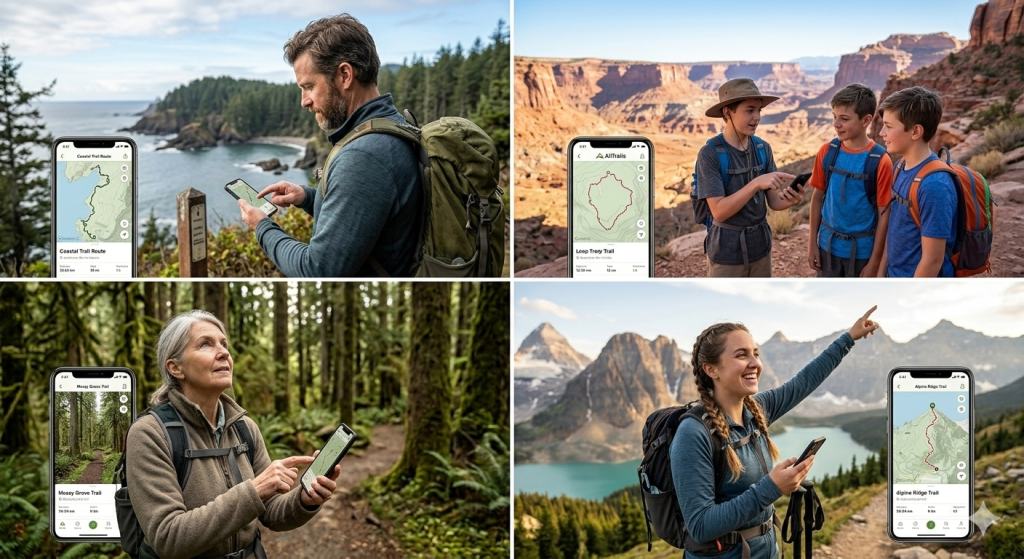
Sometimes you need more than just a pin on a map. You want to know the elevation gain, if there’s a scramble at the top, and if other hikers have seen mud or wildlife lately. For detailed stats, topographic maps, and community photos, check out the latest verified reports from your local area:
Explore Local Trails on AllTrails
Hidden Gems & Community Favorites
If you’ve already done the “popular” hikes, it’s time to see where the locals go. This link updates daily with GPS tracks uploaded by hikers in your region, often uncovering “social trails” and scenic overlooks that don’t appear on standard maps.
Discover Local GPS Tracks on Wikiloc
Choosing the Right Hiking Trail for Your Energy Level
Not every path is the right fit for your current mood. Before you click and go, consider these three categories:
- The “Recovery” Walk: Flat, paved, or well-groomed gravel paths. These are perfect for clearing your head without needing specialized hiking gear.
- The “Heart-Rate” Hike: Short but steep. Look for trails with significant elevation gain to get a solid workout in under an hour.
- The “Destination” Trek: These trails lead to a specific reward—a waterfall hike, a historic ruin, or a 360-degree vista. These are best saved for mornings when you have at least 3-4 hours to spare.
Gear Essentials for “Local” Hikes
Even if the trail is only fifteen minutes from your front door, nature doesn’t care how close you are to home. At a minimum, ensure your day pack includes:
- Illumination: A small headlamp or flashlight (phone batteries die quickly in the cold or when using GPS).
- Hydration Plus: Bring more water than you think you need, plus a high-protein snack.
- First Aid Basics: A few bandages and moleskin for unexpected blisters can save your afternoon.
Seasonal Awareness
The hiking trail “near you” changes completely every three months.
- Spring: Watch for “washouts” where heavy rain may have eroded the path.
- Summer: Check for shade coverage; a trail that is beautiful in the morning can become a heat trap by 2:00 PM.
- Fall: Leaves hide rocks and roots, watch your footing!
- Winter: Short days mean you should always know exactly what time the sun sets behind the hills, which is often earlier than the official sunset time.
Community Perspectives
Personal experiences from local hikers can help you decide which trail to tackle next:
“My all time favorite app for finding trails is AllTrails. Haven’t found anything that beats it! You can filter trails by distance, ratings, difficulty, what you want to see/do, etc.”
“I mostly use AllTrails plus, as it has the most trails. Wikiloc has perhaps more trails and user content uploaded so that can be good and bad.”
“AllTrails is the best app for discovering established trails in any area you want to hike, and with the reviews, photos and tips added by other hikers, you know what to expect.”
Pro-Tips for Your Local Hike:
- Check the Weather: Local micro-climates can change fast. Check the hourly forecast for the specific trail elevation.
- Download Offline Maps: Cell service often drops at the trailhead. Try to save the location while you still have Wi-Fi.
- Leave No Trace: To keep these trails beautiful, remember to pack out everything you pack in and follow trail etiquette.